Fibreglass Swimming Pool Maintenance
Congratulations on your new fibreglass swimming pool! Now that your backyard oasis is complete, you may be wondering what maintenance is needed to keep your pool in top condition. While fibreglass pools are known for their durability and low maintenance, there are a few tasks you’ll want to keep up with to ensure your pool stays in pristine condition.
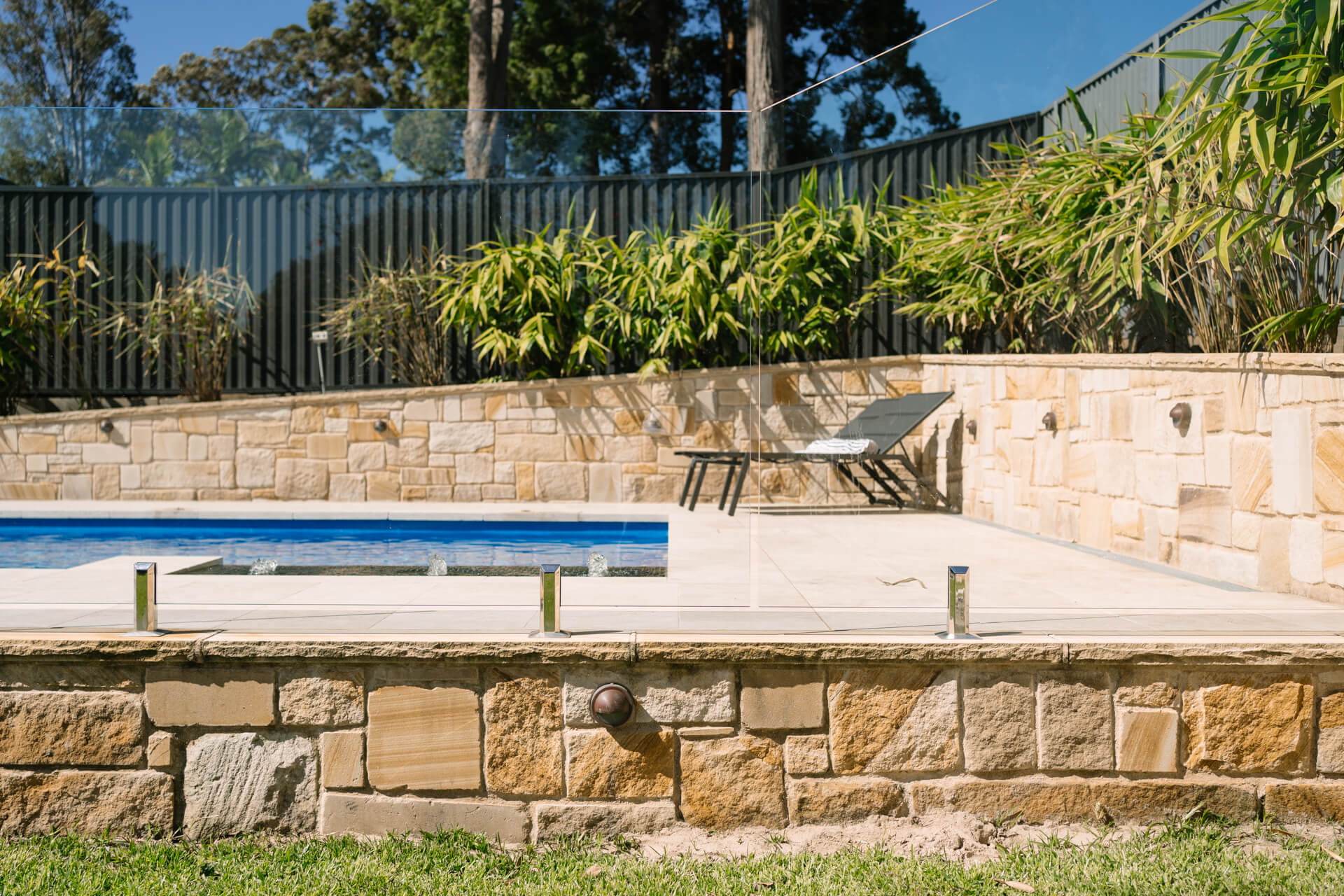
Fibreglass pool maintenance takes most Sydney owners 20 to 30 minutes a week. The gel-coat interior is non-porous, so algae has very little to grip and the surface resists staining. That means fewer chemicals and less scrubbing than a rendered concrete or pebblecrete finish.
Low maintenance is not no maintenance. Water testing, brushing and equipment checks are what keep the water clear, the surface in pristine condition ad the warranty intact. The routine below covers maintaining the pool's water quality, cleaning the shell, and the pool equipment behind it.
Fibreglass Pool Cleaning and Water Quality
Water chemistry comes first. Balanced water prevents algae growth, protects the gel-coat from clouding and scaling, and stops corrosion in the pool equipment. Test weekly through the swimming season, and twice a week through December and January when heat and heavier use burn through chlorine faster.
Target ranges for a fibreglass swimming pool:
- Free chlorine: 1.0 to 3.0 ppm
- pH level: 7.2 to 7.6
- Total alkalinity: 80 to 120 ppm
- Calcium hardness: 200 to 400 ppm
- Stabiliser (cyanuric acid): 30 to 50 ppm
- Salt, in salt-chlorinated pools: 4,000 to 6,000 ppm
Adjust one reading at a time and retest after the pool pump has run for a few hours. Pre-dissolve granular chemicals in a bucket of water before adding them. Chlorine dropped straight onto the gel-coat, or a tablet left sitting on the floor, will bleach the surface permanently.
Cleaning the shell is the other half of the job. Skim the surface and empty the skimmer and pump baskets as debris and other organic matter appears, brush the walls, steps and waterline weekly, and vacuum the floor weekly with a manual head or a robotic cleaner. Use tools rated for gel-coat. Soft-bristle brushes only, never the steel-bristle brushes sold for concrete pools, and check that a robotic cleaner's wheels or tracks are approved for fibreglass surfaces.
Stains on a fibreglass pool are almost always organic or metallic rather than damage to the surface itself. Leaf tannins mark the waterline when debris is left sitting in the water, and a waterline cleaner made for fibreglass lifts the oils and scum that build up at the pool's surface. Both are far easier to remove in the week they appear than six months later.
Mechanical Swimming Pool Maintenance
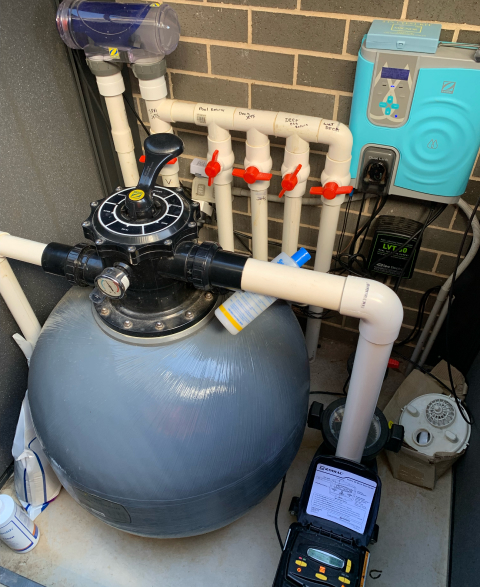
The pool equipment does the bulk of the work. Circulation and filtration are what give you crystal clear water between chemical doses, so the pump, filter and skimmer need a routine of their own.
Run the pump 8 to 12 hours a day through summer and 4 to 6 hours a day through winter, ideally split into two or three shorter cycles rather than one long run. Clean the pump strainer basket weekly. A pump that has tripped overnight stops circulation altogether, and water that sits still in a Sydney summer goes cloudy inside a day.
Backwash a sand or diatomaceous earth filter when the pressure gauge reads 8 to 10 psi above its clean baseline. Cartridge filters are lifted out and hosed down instead of backwashed, and need a deep clean every few months to clear the oils that rinsing leaves behind. A filter left running past its clean pressure window restricts flow and puts avoidable load on the pump.
Keep the water level halfway up the skimmer opening. Too low and the pump draws air, which damages the seal and can burn out the motor. Top up with a hose fitted with a trigger nozzle, as Sydney's permanent water-wise rules require.
Salt-chlorinated pools need the cell inspected for calcium build-up every three months in the harder water across Western Sydney, and every six months in softer areas. Check LED light housings once a year for moisture ingress, and book an annual service for a heat pump or gas heater. Pool and spa combos benefit from a short run of the spa jets each week, even through winter, to keep the spa-side plumbing clear.
Your Fibreglass Pool Maintenance Schedule
Spread across daily, weekly, monthly and seasonal jobs, the workload stays short. Skipping a step is what turns maintenance into a recovery job.
- Daily: Empty the skimmer and pump baskets, check the water level, and skim any leaves off the surface before they sink. Two minutes is usually enough.
- Weekly: Test and balance the water, brush the walls, steps and waterline, vacuum the floor, and check the filter pressure gauge. Twenty to thirty minutes.
- Monthly: Deep clean the cartridge filter, test the stabiliser level, inspect the salt cell for calcium build-up, and check skimmer lids, weir doors and drain covers for cracks or wear.
- Seasonally: Adjust pump run times and chlorine level targets as the weather turns. Autumn means daily skimming on blocks lined with gums or deciduous trees. Winter means shorter pump cycles and a filter clean at each end of the season. Spring means a full brush, vacuum, filter clean and rebalance before the swim season starts.
- After a storm: Skim and empty the baskets before running the pump, test and rebalance the water, and lower the level back to the middle of the skimmer if the pool has overflowed. Heavy rain dilutes the chemistry, and pH and total alkalinity usually drift first.
Sydney Poolscapes installs fibreglass pools across Sydney rather than servicing them, so this is the routine we hand over with every pool, along with a recommendation for a trusted local pool shop if something falls outside it.
Fibreglass Pool Maintenance FAQs
How much does it cost to maintain a fibreglass pool in Sydney?
For an owner handling their own upkeep, chemicals run roughly $200 to $600 a year depending on how hot the summer is and how heavily the pool is used. A robotic cleaner adds under $20 to $50 a year in electricity. Professional servicing is optional on top of that, at around $80 to $150 for a one-off visit.
Is a salt water fibreglass pool harder to maintain?
The chemical side is usually simpler, because the chlorinator produces chlorine from salt rather than you dosing it manually. The trade-offs are the electricity the chlorinator draws and the salt cell itself, which needs cleaning a few times a year and replacing at around the five to seven year mark. Salt does not harm a gel-coat interior.
Can you drain a fibreglass pool to clean it?
A fibreglass shell relies on the weight of the water to hold it against the surrounding ground, and an empty shell can lift, bulge or crack if groundwater pressure builds underneath it. Regular cleaning is done with the pool full. Partially changing 25 to 30 percent of the water every five to seven years is the normal way to bring total dissolved solids back into range.
What happens if maintenance is neglected over winter?
Unbalanced water left to sit is the most common cause of staining on an otherwise sound shell, and stains that show up in spring were usually set in months earlier. Filtration should keep running through winter on a shorter cycle rather than stopping altogether. Recovering green water costs more in chemicals than the pump would have used holding it clear.
Does maintenance affect the pool warranty?
The lifetime structural and interior warranties on the pools we install assume the water is kept within the manufacturer's ranges. Persistently high or low pH, calcium hardness left under 150 ppm, and undissolved chlorine sitting against the interior are the three issues that come up most often. A simple log of weekly readings is the easiest way to show a pool has been looked after.


