Is My Backyard Ready for a Fibreglass Pool?
A practical guide to what makes a Sydney backyard ready for a fibreglass pool, covering usable space, machinery access, soil and slope conditions, council approvals, and how Sydney Poolscapes confirms it all with a free on-site assessment.
Key Takeaways
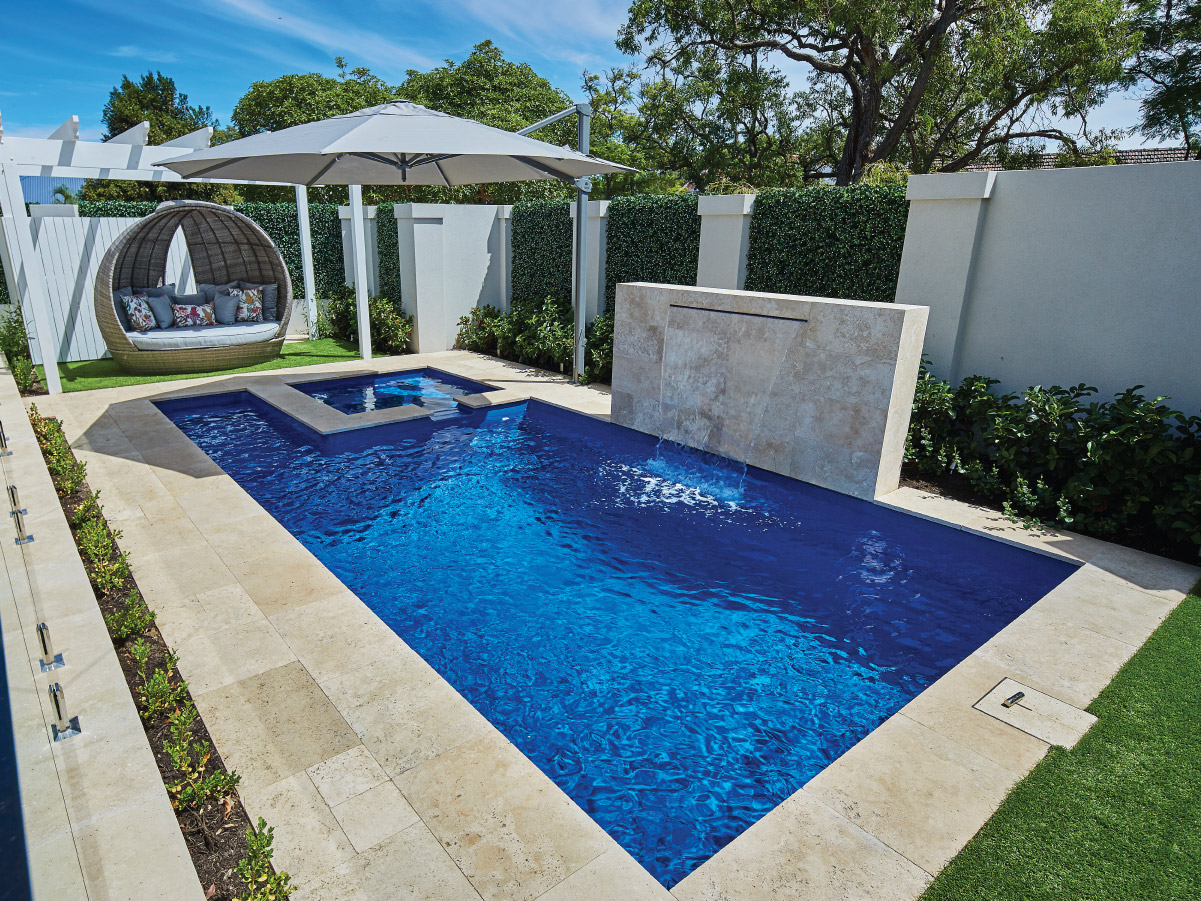
- Most Sydney backyards are more pool-ready than owners expect. The four things that decide it are usable space, machinery access, ground conditions and council approval, and a fibreglass pool can usually be made to work once those are understood.
- Access is the single biggest variable. A fibreglass pool shell arrives in one piece and is craned or lowered in, so side access, overhead clearance and street frontage often matter more than the size of the yard itself.
- Small, sloping and awkward blocks are rarely deal-breakers. With the right pool from a wide range, from compact plunge pools to larger family swimming pools, plus excavation and retaining walls handled as part of the build, backyard pools go into tight inner-city courtyards and hilly sites across Sydney every week.
Every Backyard Swimming Pool Starts With a Few Questions
When homeowners ask whether their yard is ready for a swimming pool, they are usually picturing the finished result and quietly worrying about what sits in the way. The good news is that most Sydney backyards can take a fibreglass pool. Readiness is less about having a big, flat, textbook block and more about understanding a handful of practical factors before you commit to your own pool.
A fibreglass pool is a pre-manufactured shell delivered to your home in one piece and installed, rather than constructed in the ground from scratch. That changes the questions you need to ask. Instead of worrying about long build programs, the focus shifts to whether we can get the pool and machinery into the space, what is under the ground, and what the local council will want to see. This guide walks through each of those checks so you can look at your own yard with a clearer eye, and it explains how Sydney Poolscapes confirms the details for your swimming pool with a free on-site assessment.
Start With the Space You Actually Have
How Much Room a New Pool Really Needs
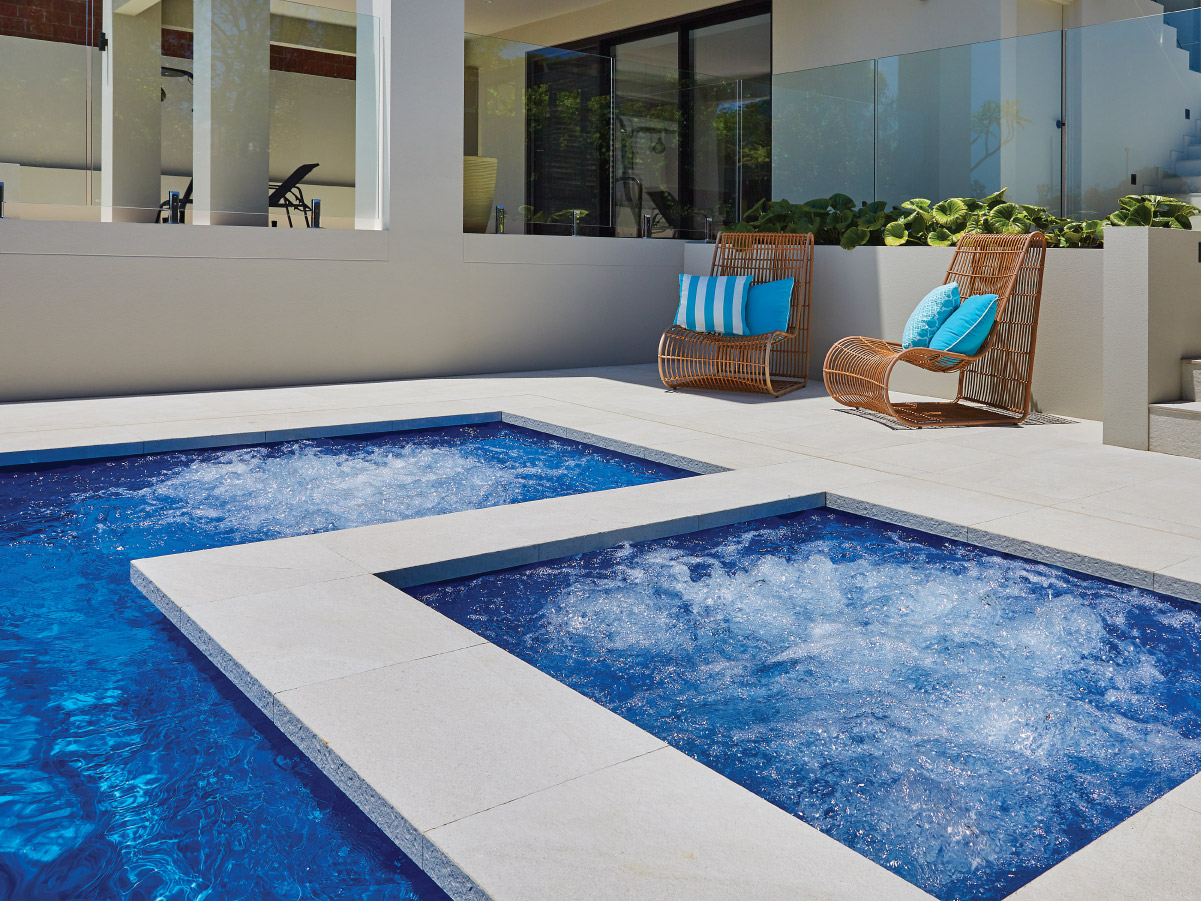
The first question is simple: how much of the yard are you genuinely willing to give over to a pool, and what needs to stay? Lawn for the kids, a clothesline, an established tree or a clear sightline from the kitchen all compete for the same ground, so it helps to sketch the yard and mark what is fixed before you think about pool size. A swimming pool, even a compact plunge pool, rarely needs the whole yard, and the best layouts leave room to relax around the water as well as swim in it.
Setbacks, Boundaries and Easements
Two measurements matter more than overall block size. The first is the pool footprint itself. The second is the setback, which is the distance a swimming pool has to keep from boundaries, the house and any easements. In NSW these setbacks are part of the approval rules, and they quietly shape where a pool can and cannot sit.
Small Backyards and Compact Pools
Small yards are where people most often assume the answer is no, and they are usually wrong. Because we install one of the largest and deepest ranges of fibreglass swimming pools in Sydney, there is almost always a pool to suit the space. The pool options run from compact plunge pools for courtyards and terraces through to slim lap pools for narrow side-of-house runs.
Plunge pools are the workhorses of the small yard, and a small backyard plunge pool of compact size can turn an underused corner into the best part of the property without swallowing it whole. That is why smaller pools are often the smartest choice on a tight block, and why a backyard swimming pool is realistic even on an inner-city lot.
Can We Get the Pool In? Access Is the Real Test
For a fibreglass pool, access is the factor that most often makes or breaks a straightforward installation process. The pool shell is a single, rigid unit, so it has to physically reach the hole. There are a few ways that happens, and each has different requirements.
Craning a Fibreglass Pool Over the House
The most common method is a crane that lifts the pool over the house or fence and lowers it into place. This needs a clear spot for the truck and crane to set up on the street or driveway, and clear airspace overhead, which means watching for power lines, large trees and close neighbouring rooftops. Craning over the roof is routine, so a fibreglass pool can reach a backyard that looks completely closed off from the street.
When Side Access Is Tight
Where a crane cannot reach, the pool can sometimes be walked in on trailers or lowered with specialised machines, though tight sites take more planning. A few things are worth checking on your own block:
- Side access width and gates. A clear side path helps, but it is not essential, because craning a pool over the roof is routine on tighter sites.
- Overhead obstructions such as power lines, eaves and mature tree canopy that a crane would need to clear or work around.
- Room out the front for a crane and delivery truck to set up safely, including the street itself.
- Whether a fence panel, section of railing or a gate needs to come out temporarily to make room.
None of these rule a pool out on their own. They simply change the method, and the method is something our team works out for you at the site assessment rather than something you need to solve in advance.
What Lies Beneath: Ground and Soil Conditions
What is under your backyard matters as much as what is on top of it. Sydney is a patchwork of soil types, and each behaves differently once excavation starts.
Common Sydney Soil Types
Clay, sand, shale and sandstone all turn up across the city, sometimes on the same street. Sandstone and rock are common through the North Shore, Northern Beaches and parts of the Inner West, and hitting rock can mean rock saws or hammering rather than a simple dig, which is worth knowing early because it affects both the timeline and the cost.
Rock, Reactive Clay and the Water Table
Reactive clay, which swells and shrinks with moisture, is common through Western Sydney and is managed as part of the engineering. Filled or previously disturbed ground, and a high water table on low-lying and coastal blocks, both change how the base is prepared.
The reassuring part is that a fibreglass pool suits almost all of these conditions once the excavation and base are done correctly, and it copes with ground movement better than a rigid concrete pool. A single-piece pool shell is engineered to sit in properly prepared ground, and the site assessment is where we identify the soil type, flag anything unusual and price the excavation honestly rather than guessing at it later.
Sloping Blocks, Retaining Walls and Raised Pools
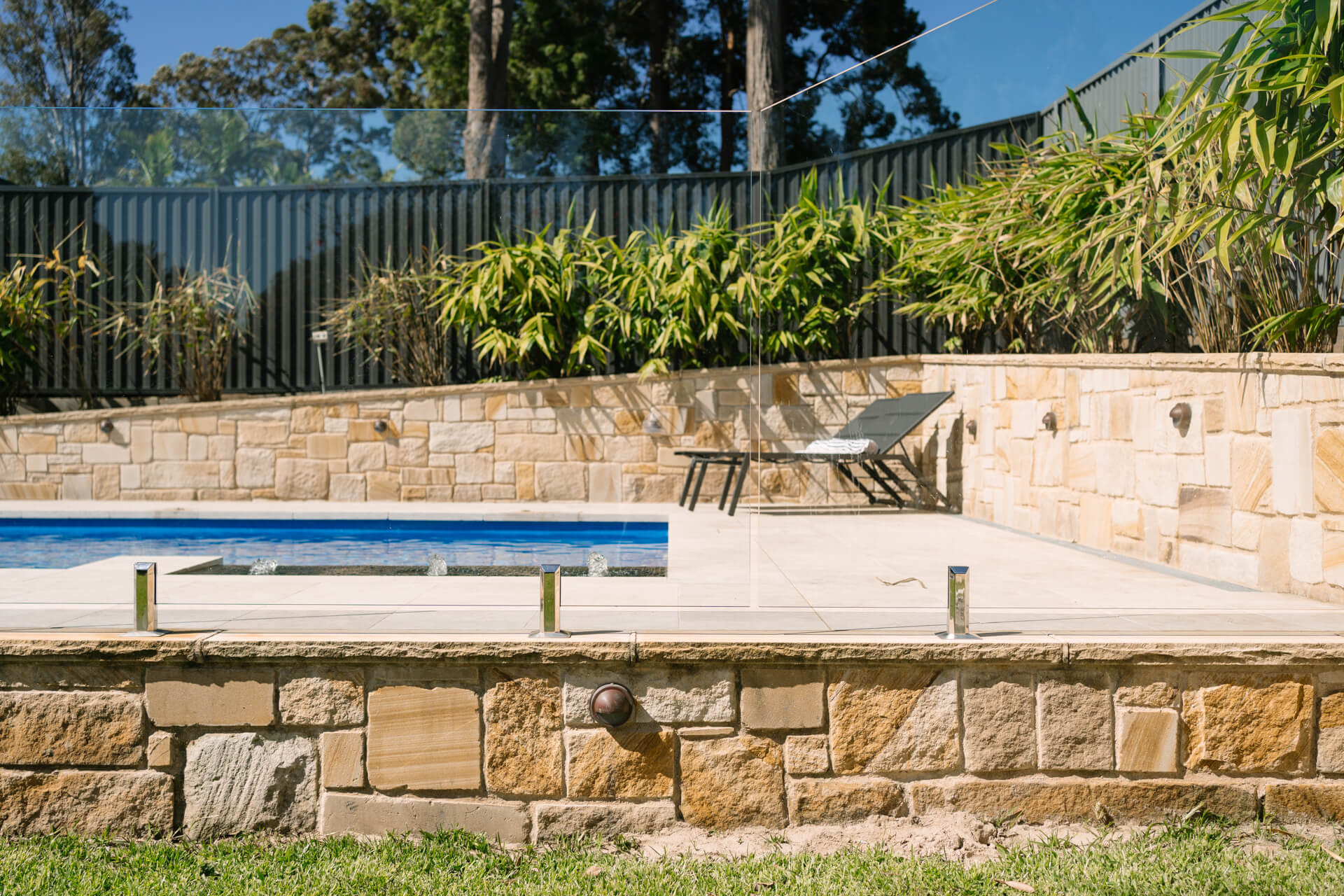
A slope is one of the most common reasons homeowners assume their backyard is off-limits, yet sloping sites are some of the most rewarding pools we install. A fibreglass pool does not need a perfectly level yard. It needs a level base cut into the ground, and the fall of the land is managed around it.
On a sloping block, that usually means excavating into the high side and building a retaining wall on the low side. The alternative is to lift the pool slightly above natural ground level and retain up to it, so part of the shell reads as an above ground pool while the rest sits in ground. Modern fibreglass is strong enough for this kind of partly raised installation, which opens up blocks where an in-ground pool alone would not fit.
Both fully in ground pools and partly above ground pools are common across Sydney's hillier suburbs, so a slope rarely rules a pool out. Retaining walls are part of what we handle within the build, so the pool, the dig and the structural work that holds the ground back are coordinated as one project rather than left for you to arrange separately. Done well, a level pool set into a sloping yard often creates a natural terrace and a flat entertaining area that the backyard never had before.
Services, Easements and What You Cannot See
Before any dig, we need to know what is already running under the yard. Backyards commonly hide stormwater and sewer lines, gas and water pipes, electrical conduits and, on some blocks, registered easements that restrict what can be built over them.
An easement, such as a sewer main or drainage line running through the property, can limit where a swimming pool sits or require sign-off from the relevant authority. This is one reason the site assessment and the approval stage matter. Underground services are located through a Dial Before You Dig search and, where needed, on-site detection, so the excavation avoids them.
If a service or easement affects the ideal pool position, it is far better to know at the planning stage than on the day the excavator arrives. In most backyards these are simply mapped and worked around, and only occasionally do they force a rethink of the layout.
Sun, Trees and Where the Pool Should Sit
Once the practical constraints are clear, the nicer question is where the pool will feel best. Aspect makes a real difference in Sydney. A swimming pool that catches the northern sun through the day stays warmer and gets used more on hot summer days, while heavy shade from the house or a neighbour keeps the water cool and drops more leaf litter in.
Established trees are worth thinking through on both counts. They offer shade and privacy, but roots can complicate a dig and overhanging canopy adds to cleaning, so their position feeds into where the pool lands. Sightlines matter too. A pool you can see from the kitchen and living areas reads as part of the home and is easier to supervise, which is why placement is about how the whole yard works, not just finding a gap big enough for a pool.
Matching the Right Pool to Your Backyard
Once you know what the block can take, the choice becomes which swimming pool suits it best. A big part of readiness is simply having enough pool options, from plunge pools to family pools, to match the space rather than forcing the space to fit one design.
Plunge, Lap and Family Pools
Sydney Poolscapes installs one of the widest fibreglass ranges in NSW, so the perfect pool is usually a matter of matching size and shape to how your household will use it. Plunge pools suit courtyards and small blocks and are ideal if you mainly want to cool off and relax, and their compact size keeps running costs low.
A lap pool suits anyone who's swimming laps for fitness on a narrow block. Family pools with a real deep end give the kids room to dive and splash, and larger pools work where the yard has the space to carry them. The point of a wide range is that plunge pools, lap pools, family pools and everything in between are on the table, so both smaller pools and larger pools can be considered and the pool fits the yard rather than the other way around.
Pool and Spa Combos and Built-in Features
For year round use, a pool and spa combo pairs a swimming pool with an integrated spa that shares the same equipment, which can be a cost-effective way to add a spa pool without a separate unit. The spa side is a standout feature on cool nights and stretches the swim season well beyond summer. Built-in features are worth thinking about at this stage too, since they are moulded into the pool shell rather than added later as optional extras.
A tanning ledge, wide entry steps and internal seating are all popular features, and a non-slip step finish is a genuine safety feature for families. Choosing these before installation keeps the whole thing a simple process rather than a retrofit.
What Backyard Readiness Means for Cost
Backyard readiness and cost are closely linked, because the same site factors that decide whether a pool fits also shape what it costs. A compact plunge pool on a flat, open block with easy crane access and clean soil sits at the lower end. Rock excavation, difficult access, a steep slope that needs retaining walls, or long service runs all add to the figure, whatever the pool.
That is why we quote against your actual site rather than a generic price. A clear, itemised quote lets you see the base pool, the installation, and any optional extras such as heating or a pool blanket, so there are no surprises later in the process. It is worth remembering that a fibreglass pool is cost effective to own as well as to build.
Fibreglass construction is quicker than concrete pool construction, so the pool installation is measured in weeks rather than months. The smooth, non-porous materials also resist algae and staining, so a fibreglass pool needs less maintenance and fewer chemicals than a concrete pool of the same size, with none of the resurfacing that a concrete pool needs down the track. For a new pool you plan to enjoy for many years, those savings on maintenance and materials are part of the value, not just the upfront cost.
Approvals: CDC, DA and BASIX
A backyard is not truly pool-ready until the paperwork lines up, and in NSW there are two approval pathways. Most standard fibreglass pool installations qualify as a Complying Development Certificate, or CDC, which is the faster route. Blocks with complicating factors, such as heritage listings, bushfire or flood zones, or tight boundary setbacks, may need a full Development Application, or DA, through the local council. Any pool holding 40,000 litres or more also needs a BASIX Certificate covering water and energy efficiency.
You do not need to navigate this alone. Sydney Poolscapes lodges the CDC or DA on your behalf and walks you through what your council will check, so the approval side stays clear rather than becoming a second project. The main thing to understand up front is that approvals are a normal, expected step in the process, not a sign your backyard has a problem.
Fencing and Safety You Will Need to Plan For
Every swimming pool in NSW has to be fenced and compliant, and it is worth factoring this in from the start. Pool barriers must meet the AS1926 standard, which sets a minimum fence height of 1.2 metres, limits gaps, requires a non-climbable zone around the barrier and calls for self-closing, self-latching gates. Pools also have to be registered on the NSW Swimming Pool Register.
Sydney Poolscapes installs the pool rather than the fencing, but it helps to plan the barrier and the surrounds early so the finished space works as a whole. Leaving room for the required non-climbable zone, and thinking about where the fence and any paving, decking or landscaping will sit, means the compliant version of your backyard is also the one you actually want to live with.
How Sydney Poolscapes Confirms Your Backyard Is Ready
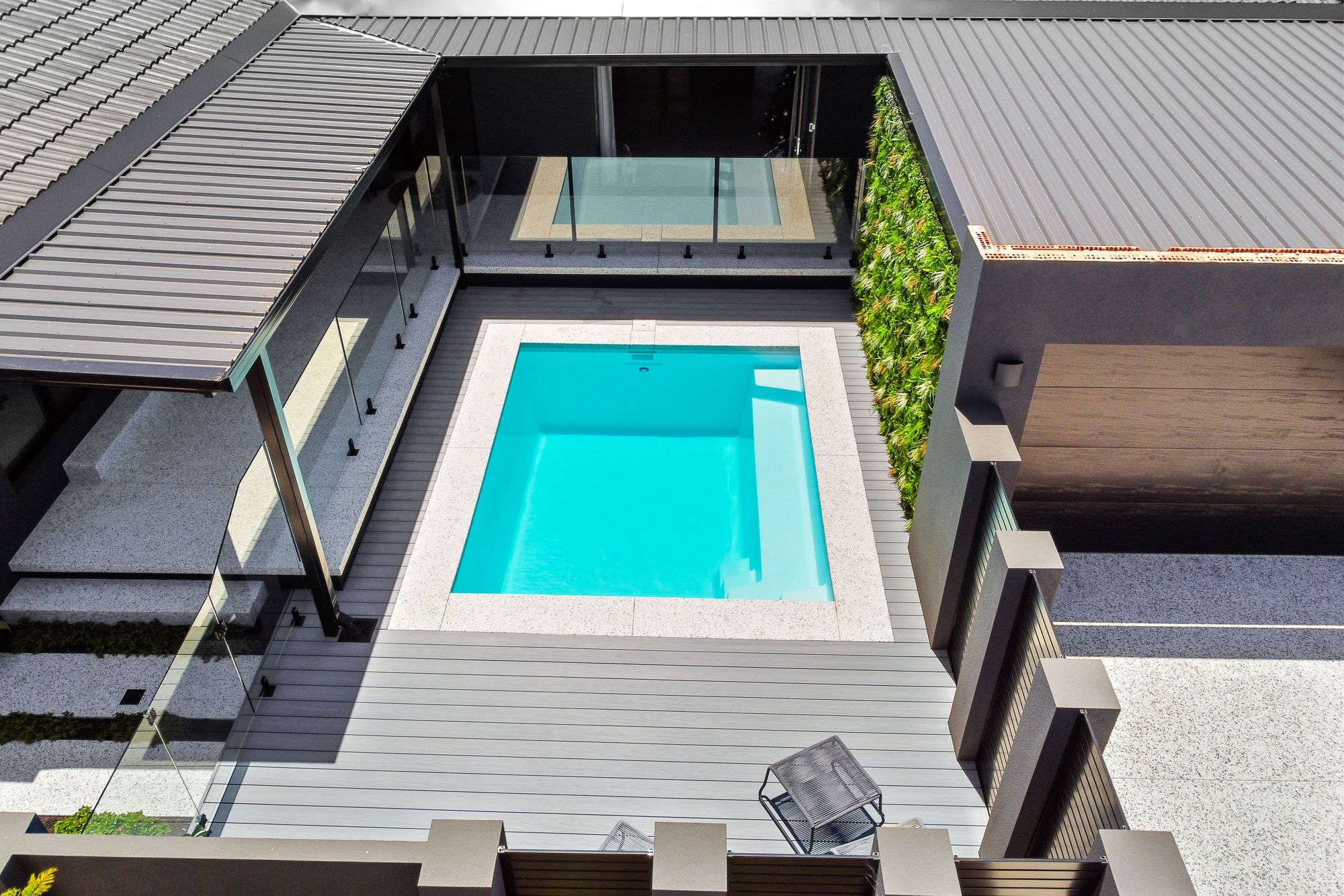
Reading through these checks is a useful start, but the honest answer for any specific backyard comes from standing in it. A free on-site assessment is where the guesswork ends. We measure the available space and setbacks, work out the best access method, identify the soil and slope, check for services and easements, and talk through the pools in our range that suit both the block and the way your household wants to use the yard.
From there you get a clear, transparent picture of what your block can take and what the project involves, with pricing that reflects your actual site rather than a generic estimate. As a local, family-owned pool builder, our team has spent more than 15 years installing fibreglass backyard pools for Sydney families.
Wherever your location, from the Northern Beaches through to the Inner West, South Sydney and the Hills District, the same team handles the pool from the first site visit to handover. If you would like a straight answer on whether your yard is ready, call us on 1300 112 488 to book an obligation-free site consultation and free quote.
Backyard Pools FAQs
How close to my house can a fibreglass pool be installed?
There is no single fixed distance, because it depends on your footings, the soil and the local setback rules, but a swimming pool can usually sit reasonably close to the home when the excavation is engineered for it. The main considerations are protecting the house footings during the dig and keeping enough room for a compliant coping and paving edge around the pool. On tight blocks this is assessed case by case, and the pool is positioned to keep a safe, workable margin from the building.
Can a fibreglass pool go on a suspended slab, podium or rooftop?
This is a specialised situation rather than a standard backyard installation. A pool placed over a garage, basement or any suspended structure relies on that structure being engineered to carry the full weight of the pool, the water and the people in it, which usually calls for a structural engineer's assessment before anything is confirmed. It is not impossible, but it sits outside a typical ground-level build and needs to be scoped carefully at the planning stage.
Do I need to tell my neighbours before installing a pool?
For most Complying Development approvals there is a requirement to notify adjoining neighbours before work begins, and it is good practice regardless. A quick heads-up about crane day and delivery access tends to smooth the whole process, since a crane may briefly work over a shared boundary and the truck will occupy part of the street. Where a full Development Application applies, formal neighbour notification is built into the council process.
What happens if my backyard floods or sits in an overland flow path?
A flood-prone or overland-flow block does not automatically rule out a pool, but it does change the approval path and the design detail. These sites typically need a Development Application rather than a Complying Development Certificate, and the pool level, surrounds and drainage are designed with the flood behaviour in mind. The site assessment flags this early so the pool is planned to suit the conditions rather than fight them.
Is there a minimum backyard size for a fibreglass pool?
There is no official minimum, and compact designs open up spaces most people write off. Plunge pools with footprints in the range of roughly two and a half by five metres fit courtyards, terraces and narrow side-of-house runs where a full-size pool never could. What matters more than raw square metres is the shape of the usable area, the access to it and the setbacks, which is why even very small backyards are worth assessing rather than ruling out.
Will installing a pool change how my backyard drains?
A pool and its surrounds do alter how surface water moves across the yard, so drainage is considered as part of the design rather than left to chance. The concrete surround we pour is graded to fall away from the pool toward existing drainage, the surrounding levels are planned with the same goal in mind, and the filter's backwash water is discharged in line with Sydney Water guidelines. Handled properly at the build stage, the finished yard manages water at least as well as it did before, and often better.


